
Electrical Shaft Fire Door
Electrical Shaft Fire Door Manufacturer in West Bengal, Kolkata, Jharkhand, Odisha, Assam and Chhattisgarh
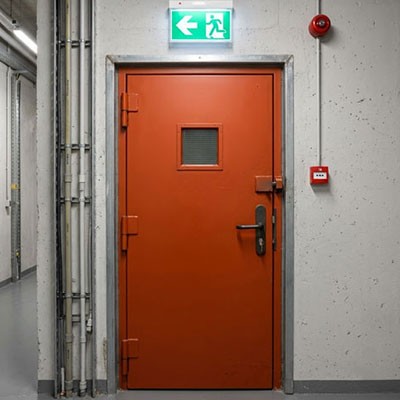
Royco Fire Doors Pvt Ltd – Engineered Protection for Electrical Service Shafts
Royco Fire Doors Pvt Ltd provides electrical shaft fire door solutions for building projects requiring controlled access to electrical risers, cable shafts and utility enclosures. Designed for installation at designated shaft openings, these doors help maintain fire separation between floors and reduce the risk of fire and smoke travelling through vertical service spaces. We cater to project requirements across West Bengal, Kolkata, Jharkhand, Odisha, Assam and Chhattisgarh, supporting residential, commercial, institutional and industrial construction.
Product Description: Electrical Shaft Fire Doors for Building Safety
An electrical shaft fire door is an access door fitted over an opening that leads to a building’s electrical service shaft. These shafts may contain power cables, distribution lines, communication wiring and other electrical infrastructure running between floors.
Unlike an ordinary access panel, a fire-rated electrical shaft door is designed as part of a fire-resisting assembly. Depending on the project specification, it may feature a steel door leaf, a compatible frame, fire-resistant internal insulation, suitable hinges, a locking arrangement and intumescent seals. When the complete assembly is tested, correctly installed and kept in proper working condition, it helps restrict fire spread through the shaft opening while allowing authorised personnel to access services for inspection and maintenance.
Royco Fire Doors Pvt Ltd can assist project teams in identifying suitable door configurations based on opening dimensions, wall construction, access requirements and the required fire-resistance performance.
How Electrical Shaft Fire Doors Are Manufactured
The manufacturing process involves several stages to achieve suitable dimensions, secure fitting and reliable operation.
- Project Drawing and Measurement
The required opening dimensions, wall details, door orientation, hardware provisions and specified fire rating are reviewed before fabrication begins. - Selection of Suitable Materials
Steel sheets and frame materials are selected according to the approved design and intended application. The material grade, thickness and protective finish are determined by the project specification. - Sheet Cutting and Precision Forming
The door skins and frame components are cut and formed to the required dimensions. Accurate fabrication helps achieve proper alignment and reduces unwanted gaps around the door. - Leaf Assembly and Internal Insulation
Where specified in the tested design, the door leaf is assembled with a suitable fire-resistant core and internal reinforcements. The construction must follow the configuration used for the relevant fire-resistance assessment. - Frame Fabrication and Hardware Preparation
The frame is prepared with the required fixing provisions. Hinges, locks, handles, closers and other components are selected to suit the approved assembly and operational needs. - Surface Finishing and Quality Inspection
The finished components are checked for dimensions, surface condition, alignment and hardware compatibility. A suitable primer, coating or galvanised finish may be used as specified. - Final Verification and Dispatch
Before dispatch, the product configuration and associated documentation should be checked against the approved project requirements. Any claimed fire rating must be supported by the applicable test or certification documents for the complete door assembly.
Technical Details of Electrical Shaft Fire Doors
The technical requirements of an electrical shaft fire door depend on the building design, the shaft enclosure and the required level of fire resistance. The following table outlines parameters that should be finalised before ordering.
| Technical parameter | Details to confirm |
| Product type | Electrical shaft access fire door |
| Door configuration | Single-leaf or other approved configuration |
| Door leaf material | Galvanised steel or specified compatible steel |
| Internal core | Fire-resistant infill as required by the tested design |
| Frame construction | Steel frame compatible with the door and shaft wall |
| Fire-resistance rating | As required by the approved building and fire-safety specification |
| Available dimensions | Customised to the verified site opening and approved drawings |
| Hinges and locking | Hardware compatible with the intended fire-rated assembly |
| Sealing arrangement | Intumescent and smoke seals where specified in the tested design |
| Surface finish | Primer, protective coating or other specified finish |
| Reference standard | IS 3614:2021 and applicable fire-test requirements, where relevant |
| Installation | Fixed to a compatible wall or shaft enclosure in accordance with approved details |
Important technical note: IS 3614:2021 covers fire doors and doorsets. A fire-resistance rating applies to the tested or appropriately certified assembly—not simply to the steel sheet or insulation used. The rating, dimensions, hardware and installation details must be consistent with the relevant test evidence and project requirements.
Where Electrical Shaft Fire Doors Can Be Used
Electrical shaft fire doors are useful wherever electrical services pass vertically through a building and require secure maintenance access.
- Residential high-rise buildings: For electrical risers and cable shafts serving multiple apartments and floors.
- Commercial office complexes: For access to floor-wise electrical distribution and cable infrastructure.
- Shopping malls and retail buildings: For electrical service enclosures located near common areas and tenant spaces.
- Hospitals and healthcare facilities: For electrical shafts supporting essential building services, subject to the facility’s fire-safety design.
- Hotels and hospitality projects: For utility shafts serving guest floors and building operations.
- IT parks and data facilities: For access to designated cable risers and electrical service routes.
- Factories and industrial buildings: For electrical distribution shafts and service enclosures in suitable building layouts.
- Educational institutions and public buildings: For controlled access to vertical electrical services.
The appropriate door specification should be determined by the building’s fire strategy, local regulations, consultant-approved drawings and the required access conditions.
Why Choose an Electrical Shaft Fire Door?
Choosing a properly specified electrical shaft fire door offers several practical advantages for building owners, contractors and facility managers.
- Helps Limit Vertical Fire Spread
A suitable fire-rated assembly helps preserve the fire separation at shaft openings, reducing the possibility of fire spreading between floors through an unprotected access point. - Supports Safer Building Design
Electrical shaft doors form one element of a broader passive fire-protection strategy alongside compartment walls, floor slabs and other approved fire-stopping measures. - Provides Controlled Maintenance Access
A dedicated access door allows authorised technicians to inspect cables, perform repairs and manage electrical services without leaving the shaft permanently exposed. - Offers a Purpose-Built Fit
Door dimensions and frame arrangements can be selected to match approved opening sizes, helping avoid unsuitable site modifications. - Improves Day-to-Day Utility Management
A suitable locking arrangement helps control access to electrical infrastructure and reduces casual interference with essential services. - Supports Project-Specific Compliance
Selecting a door assembly with appropriate test documentation and compatible hardware helps project teams verify that the specified fire-protection requirements are being addressed.
Electrical Shaft Fire Door Manufacturer Serving Six Key Markets
Royco Fire Doors Pvt Ltd serves project enquiries for electrical shaft fire doors across the following locations:
- West Bengal: Solutions for residential developments, commercial properties, industrial premises and institutional construction.
- Kolkata: Electrical shaft door requirements for high-rise buildings, offices, hospitals, shopping complexes and renovation projects.
- Jharkhand: Door requirements for commercial buildings, industrial facilities, residential complexes and infrastructure projects.
- Odisha: Electrical service shaft access solutions for urban developments, institutional buildings and industrial projects.
- Assam: Project-specific requirements for residential, commercial and public infrastructure.
- Chhattisgarh: Electrical shaft door solutions for commercial construction, industrial premises and multi-storey buildings.
Whether you are planning a new development or upgrading existing service enclosures, share your project drawings, required fire rating, opening dimensions and site location to help determine the appropriate product configuration.
Conclusion: Discuss Your Electrical Shaft Fire Door Requirements
Electrical shaft openings need careful attention because unprotected gaps can compromise the fire separation between building floors. Selecting a suitable door assembly, ensuring compatible installation and maintaining the door in working condition are important parts of an effective building fire-safety plan.
Royco Fire Doors Pvt Ltd welcomes enquiries for electrical shaft fire door requirements in West Bengal, Kolkata, Jharkhand, Odisha, Assam and Chhattisgarh. Contact our team with your technical specifications and project requirements to discuss a suitable solution for your building.