
Lead Lined Door
Lead Lined Door Manufacturer in West Bengal, Kolkata, Jharkhand, Odisha, Assam and Chhattisgarh
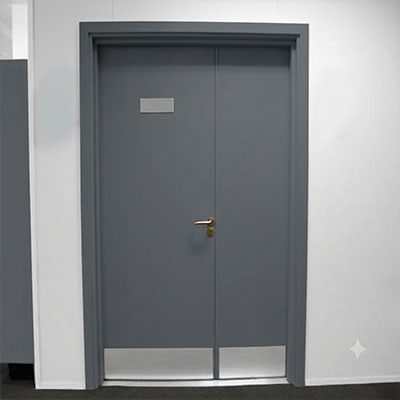
Lead Lined Doors for Radiation Protection and Specialised Facilities
Lead lined doors are specially engineered doors designed to help control the passage of X-ray and other forms of ionising radiation through door openings. They are commonly installed in diagnostic imaging rooms, radiology departments, dental X-ray clinics, medical laboratories and other facilities where radiation shielding is an essential part of building safety.
Royco Fire Doors Pvt Ltd caters to specialised door requirements for healthcare facilities, diagnostic centres and institutional projects. As a Lead Lined Door Manufacturer serving West Bengal, Kolkata, Jharkhand, Odisha, Assam and Chhattisgarh, the company can be approached for project-specific requirements involving door dimensions, lead shielding thickness, frame construction and finishing options.
Unlike ordinary interior doors, lead lined doors require careful coordination between the door leaf, shielding material, frame, joints and surrounding wall protection. The complete installation must be designed according to the radiation protection requirements of the facility.
How Lead Lined Doors Protect Sensitive Areas
Lead lined doors incorporate a lead sheet within the door structure to attenuate X-ray radiation passing through an opening. The required shielding level depends on the type of equipment, operating workload, radiation energy, room layout and the protection requirements established for the facility.
These doors are particularly important in rooms where radiation-producing equipment operates regularly. Properly specified shielding helps maintain the continuity of the protective barrier between the examination room and adjacent occupied areas.
Royco Fire Doors Pvt Ltd can be contacted to discuss project requirements and identify suitable door configurations for medical and technical environments. Final shielding specifications should be established by the responsible radiation protection expert and verified against applicable regulatory requirements.
Important Construction Elements of Lead Lined Doors
Integrated Lead Shielding
The lead sheet is incorporated into the door leaf to provide the specified radiation attenuation. Its thickness must be selected according to the approved shielding design rather than a general standard thickness.
Reinforced Door Leaf
The door construction must accommodate the shielding layer while maintaining suitable rigidity, alignment and reliable operation. The selection of core materials and reinforcement depends on the door size and design.
Shielded Door Frame
The frame and its connection to the surrounding wall must maintain the intended shielding protection around the opening. Inadequate frame protection or unshielded gaps can compromise the effectiveness of the installation.
Secure Edge and Joint Design
The meeting edges, overlaps and clearances require careful detailing to avoid radiation leakage paths. The design should account for the door’s movement and the geometry of the opening.
Durable External Finish
Suitable surface finishes can provide a clean appearance and support routine cleaning in hospitals, laboratories and diagnostic facilities.
Compatible Operating Hardware
Hinges, handles, locks and other fittings should be selected to accommodate the door’s weight and frequency of use. Additional reinforcement may be necessary for larger or heavier door assemblies.
Technical Specification Guide for Lead Lined Doors
Lead lined doors are not specified by size alone. Their shielding performance, structural design and installation details must be evaluated together.
| Technical Parameter | Project Specification Requirement |
| Door Configuration | Single-leaf or double-leaf, depending on the opening |
| Radiation Shielding Material | Lead sheet integrated into the door assembly |
| Lead Thickness | Determined by the approved radiation shielding calculation |
| Door Dimensions | Based on the clear opening and equipment access requirements |
| Door Leaf Construction | Selected to accommodate the lead layer and required structural strength |
| Frame Material | Compatible with the door design and shielding arrangement |
| Frame Shielding | Designed to maintain continuity with the adjoining protected wall |
| Surface Finish | Selected according to hygiene, appearance and maintenance requirements |
| Hinges and Hardware | Rated for the finished door weight and operating conditions |
| Installation | Must follow the approved shielding details and manufacturer’s instructions |
| Performance Verification | Based on applicable radiation protection requirements and appropriate inspection or testing |
Technical note: The final lead equivalence, dimensions, tolerances and construction details must be confirmed for each project. A universal lead thickness cannot be recommended for every X-ray room or radiation-producing installation.
Different Lead Lined Door Options
The appropriate door configuration depends on the room layout, equipment access, traffic level and shielding design.
- Single-Leaf Lead Lined Doors
Suitable for many standard room entrances where a single door leaf provides sufficient access for staff and patients.
- Double-Leaf Lead Lined Doors
Considered for wider openings, larger equipment access points and selected specialised medical installations. Both leaves and their meeting joint must be addressed in the shielding design.
- X-Ray Room Entrance Doors
Designed for diagnostic imaging environments where the entrance forms part of the radiation-protected enclosure.
- CT Scan Room Doors
Specified for computed tomography facilities according to the equipment manufacturer’s requirements and the approved room shielding calculations.
- Dental Radiography Room Doors
Used in dental clinics and imaging centres where the door must form part of a suitably designed radiation protection arrangement.
- Custom-Sized Shielded Doors
Made to project dimensions where standard door configurations do not meet the opening size, access requirements or architectural layout.
Product availability and exact construction options should be confirmed with Royco Fire Doors Pvt Ltd before finalising the project specification.
Where Lead Lined Doors Are Used
Lead lined doors serve specialised environments in which radiation protection must be incorporated into the building design.
- Hospitals and Medical Colleges: For designated radiology and diagnostic imaging areas.
- Diagnostic Imaging Centres: For X-ray, CT and other relevant imaging rooms.
- Dental Clinics: For rooms housing dental radiography equipment.
- Medical Research Laboratories: For selected facilities using radiation-producing equipment.
- Veterinary Hospitals: For designated animal imaging and radiography rooms.
- Specialised Testing Facilities: For approved technical environments requiring radiation shielding.
- Healthcare Construction Projects: For new hospitals, diagnostic centres and renovation work involving shielded rooms.
The required door type and shielding level must always be matched to the actual radiation source and the intended use of the room.
Manufacturing and Quality Assurance Considerations
Producing a reliable lead lined door involves more than incorporating a sheet of lead into a conventional door. Shielding continuity, structural integrity and installation accuracy are all important considerations.
Shielding Material Verification
The lead material should be checked against the specified thickness and relevant material requirements before assembly.
Accurate Fabrication
Door components must be fabricated to the approved dimensions so that the leaf, frame and adjoining structural opening fit correctly.
Controlled Assembly
The shielding layer must be integrated into the door construction without introducing unintended gaps or discontinuities in the protective barrier.
Frame and Edge Coordination
The frame, door perimeter and meeting edges should follow the approved shielding details to minimise potential radiation leakage paths.
Hardware and Weight Assessment
The completed door’s weight must be considered when selecting hinges, fixing points and operating hardware. This supports smooth movement and reduces the risk of premature wear.
Installation and Performance Checks
The installed assembly should be inspected against the approved design. Where required, radiation surveys or other verification procedures should be conducted by appropriately qualified personnel.
Actual certifications, inspection reports and test documentation should be requested and reviewed wherever the project or applicable regulations require them.
Lead Lined Door Manufacturer Serving Eastern and Central India
Royco Fire Doors Pvt Ltd welcomes enquiries for lead lined door requirements across the following locations:
- West Bengal: Supporting enquiries from healthcare institutions, imaging centres and commercial construction projects throughout the state.
- Kolkata: Serving project enquiries for hospitals, diagnostic laboratories, dental clinics and specialised medical facilities in the city.
- Jharkhand: Catering to requirements for medical institutions, diagnostic centres and healthcare infrastructure projects.
- Odisha: Supporting enquiries for hospital construction, radiology departments and diagnostic facility development.
- Assam: Addressing lead lined door requirements for healthcare establishments and specialised imaging facilities.
- Chhattisgarh: Catering to project enquiries from hospitals, diagnostic centres and other facilities requiring radiation-shielded access.
Customers can share their opening dimensions, required lead equivalence, room type, project drawings and quantity requirements to facilitate a more accurate technical discussion.
Why Consider Royco Fire Doors Pvt Ltd for Lead Lined Doors?
Project-Specific Door Planning
Radiation-shielded openings require careful coordination between architectural drawings, room shielding and door construction. Clear project specifications help establish the appropriate configuration.
Attention to Shielding Details
The door leaf, frame, perimeter and adjoining wall protection must work together as part of a continuous shielding arrangement.
Adaptability to Different Facilities
Medical imaging rooms, dental clinics and specialised laboratories may have different access and construction requirements. The door design should reflect the intended application.
Coordination with Project Consultants
Working from approved drawings and technical requirements helps align the door specification with the architect’s, equipment supplier’s and radiation protection expert’s recommendations.
Support for Regional Project Requirements
Customers across West Bengal, Kolkata, Jharkhand, Odisha, Assam and Chhattisgarh can enquire about project suitability, available configurations, delivery arrangements and commercial terms.
Emphasis on Safety-Related Specifications
Lead equivalence, installation detailing and appropriate verification should be established before a door is accepted for use in a radiation-controlled environment.
Frequently Asked Questions About Lead Lined Doors
- What is the purpose of a lead lined door?
A lead lined door helps attenuate X-ray and other ionising radiation when correctly designed and installed as part of a radiation shielding system.
- How thick should the lead sheet be?
The required thickness depends on the radiation source, equipment workload, room arrangement and applicable shielding calculations. It should not be selected using a generic thickness recommendation.
- Can lead lined doors be made in custom dimensions?
Project-specific dimensions may be possible, subject to the manufacturer’s capabilities, door construction and the approved shielding design.
- Are lead lined doors required in every hospital room?
No. They are generally specified for designated rooms where radiation protection assessments indicate that shielding is necessary.
- Do lead lined doors require special installation?
Yes. Their installation must account for frame shielding, perimeter gaps, meeting edges, fixings and continuity with the surrounding protected structure.
Conclusion
Lead lined doors are an important component of radiation protection planning in hospitals, diagnostic imaging centres, dental clinics and specialised laboratories. Their effectiveness depends on the correct lead shielding specification, carefully designed door and frame construction, accurate installation and suitable performance verification.
Royco Fire Doors Pvt Ltd serves lead lined door enquiries across West Bengal, Kolkata, Jharkhand, Odisha, Assam and Chhattisgarh. For a project-specific discussion, customers can provide their required dimensions, shielding details, room application and quantity to confirm suitable product options, technical specifications and pricing.